The Role of Retrieval-Augmented Generative Models in Ad Campaign

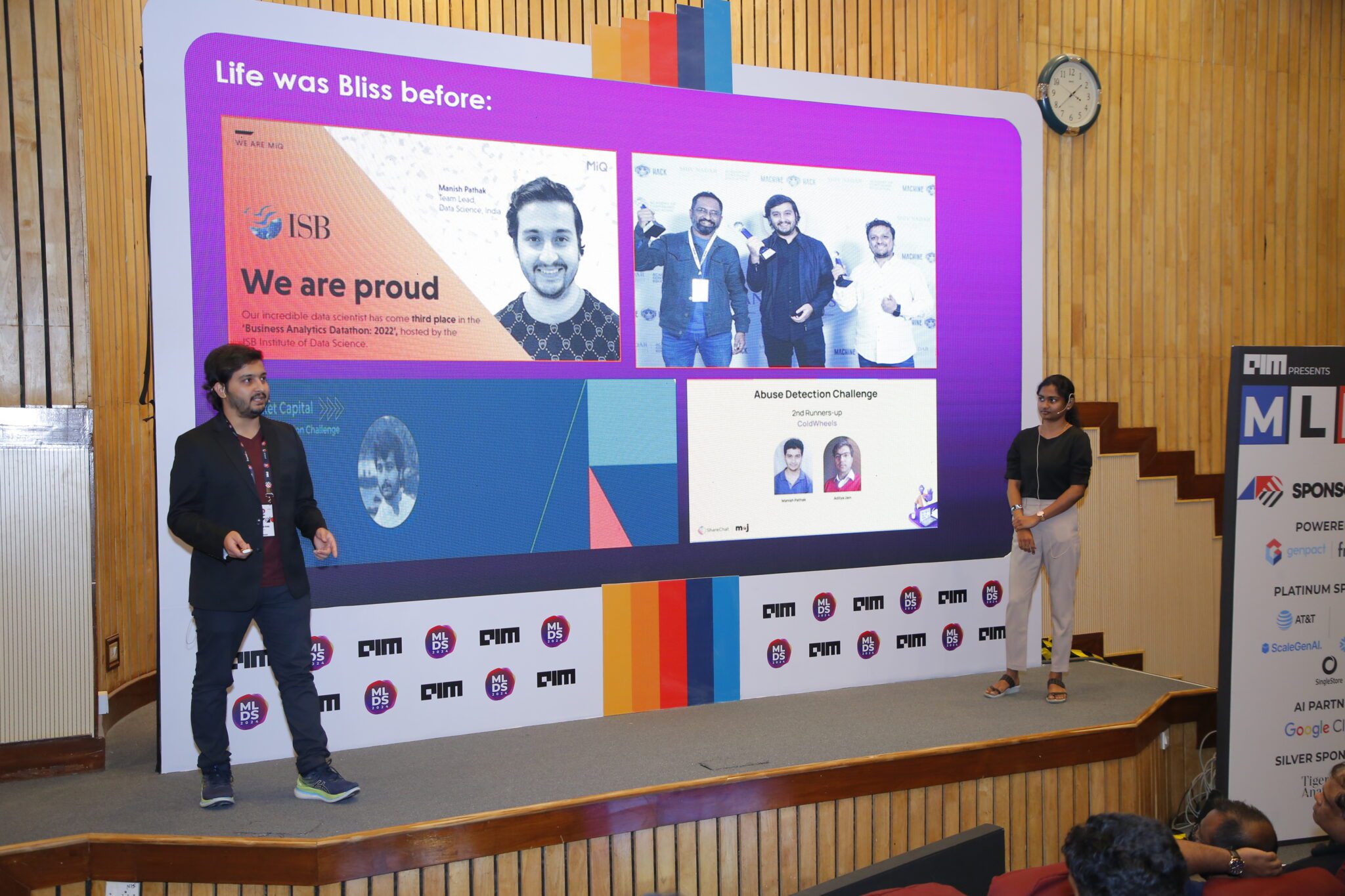
In the fast-evolving landscape of digital advertising, staying ahead requires innovative solutions. MiQ, a leading player in programmatic advertising, has embraced the power of Large Language Models (LLMs) to revolutionize its approach. In this article, we delve into the presentation on how MiQ, led by Team Lead Data Scientist Manish Pathak, is leveraging LLMs to run efficient ad campaigns and redefine the programmatic advertising domain during the Machine Learning Developers Summit (MLDS) 2024.
Unleashing the Potential of Large Language Models
Manish’s presentation centers around the application of Large Language Models in programmatic advertising. The key focus is to explore how LLMs can address challenges within the structured numerical data prevalent in advertising. Acknowledging the limitations of LLMs in handling such data, Manish and his team identified strategic use cases where LLMs could seamlessly integrate and enhance efficiency.
Navigating the Programmatic Advertising Landscape
Understanding programmatic media advertising involves a journey through the intricacies of ad auctions, demand-side platforms (DSPs), ad exchanges, and supply-side platforms (SSPs). MiQ’s role in this ecosystem is to assist advertisers in targeting the right audience effectively. Manish provides insights into the pre-campaign, setup, optimization, and post-campaign phases, highlighting the complexity and scale of the advertising domain.
Challenges and Inflection Point
Manish reflects on a turning point in his career marked by the sudden surge in interest around Large Language Models. While acknowledging the advantages of LLMs, he emphasizes their historical presence since 2017. However, the recent buzz is attributed to their exponential growth in parameters and trained data. The challenge for MiQ was to find the right use cases for LLMs within the advertising framework.
Rethinking Strategies with RAGs
To overcome challenges associated with LLMs, MiQ turned to Retrieval-Augmented Generative Models (RAGs). Manish introduces RAGs as an alternative that provides a non-parametric memory, freeing models from knowledge cut-off limitations. RAGs offer the ability to retrieve relevant context from an external knowledge base, mitigating the shortcomings of traditional LLMs.
Technical Insights and Frameworks
Viva, a key member of Manish’s team, dives into the technical aspects and frameworks used in MiQ’s implementation of RAGs. The article explores the components of RAGs, such as orchestrators, retrievers, knowledge bases, LLM endpoints, and users. A detailed breakdown of the indexing and retrieval pipeline sheds light on the intricacies of implementing RAGs in a real-world scenario.
MiQ’s LLM Toolkit: Bridging Conversational Gaps
MiQ’s innovative toolkit comprises four distinct LLM models, each designed to address specific use cases in the campaign life cycle. These include a Pitch Recommender, Feature Recommender, Performance Analyzer, and Email Summarizer. Viva explains how these models seamlessly connect, providing traders with valuable insights and recommendations at every stage of the advertising journey.
Experimental Setup and Integration
The article offers a glimpse into the experimental setup, revealing the integration of chat models and embedding models. Viva walks through the Question-Answering (QA) system’s implementation, emphasizing the use of RAG techniques for answering queries on MiQ’s private documents. The deployment in Kubernetes, the UI written in React JS, and the role of the chat server in preserving chat history showcase the technical backbone of MiQ’s LLM implementation.
Future Directions
While MiQ’s LLM initiative has laid a solid foundation, Manish and his team acknowledge the scope for future improvements. The roadmap includes implementing a robust evaluation framework, exploring privacy-centric LLMs, leveraging open-source models, and fine-tuning methods. The emphasis is on continuous learning and adaptation to the evolving landscape of large language models.
Conclusion
MiQ’s journey with Large Language Models exemplifies a forward-thinking approach in the programmatic advertising space. By strategically applying RAGs and building a comprehensive LLM toolkit, Manish Pathak and his team are paving the way for more efficient, data-driven, and scalable advertising campaigns. As the industry continues to embrace the power of language models, MiQ stands out as a pioneer in reshaping the future of programmatic advertising.
ADaSci Editorial
The ADaSci Editorial team publishes research explainers, industry analysis and practical guides for AI and data science professionals.
Get Credentialed
More Articles

Best FDE Course in 2026: CFDE vs Bootcamps vs Self-Study (Complete Comparison)
Aug 14, 2026
Your Resume Is Being Read by an Algorithm Before a Human—Here’s How to Engineer It
Aug 14, 2026
Why AIDP does not have a reading list
Jun 8, 2026
Your Team Can Demo AI. Can They Deploy It Inside a Customer’s Stack?
May 25, 2026