
Implementing RAG over Excel Sheets through LlamaIndex

LlamaIndex is the leading data framework for building LLM applications that can bridge the gap between user data and LLMs specifically for Retrieval Augmented Generation (RAG) tasks. The data loaders available in LlamaIndex are utilised to ingest data from different sources and prepare it for interaction with LLMs. Using LlamaParse in combination with data loaders can help users in parsing complex documents like excel sheets, making them suitable for LLM usage. This article explores the capabilities of LlamaIndex in conjunction with LlamaParse for implementing RAG over Excel Sheets.
Understanding LlamaIndex
Large Language Models (LLMs) offer a way to interface with staggering quantities of data by functioning as an interface between complex datasets and human language. Pre-training made accessible to the public has been applied to an extensive variety of resources, including books, encyclopedias, email archives, programming codes, and other digital resources. However, a significant drawback is that these models lack direct access to confidential or specialised data sources, which could be disguised within relational databases, PDFs, or even PowerPoint slides.
LlamaIndex provides a solution to this problem with its Retrieval Augmented Generation (RAG) feature. RAG facilitates the extraction, transformation, and generation of fresh insights from one's data by engaging with an assortment of data sources. In addition to investigating an array of different applications, users can formulate queries regarding their data and layout semi-autonomous bots or conversational interfaces. To put it briefly, LlamaIndex is an orchestration framework designed to make it easier for developers to incorporate private and public data whilst building applications which facilitate the use of Large Language Models (LLMs). It provides instrumentation for querying, indexing, and data ingestion.
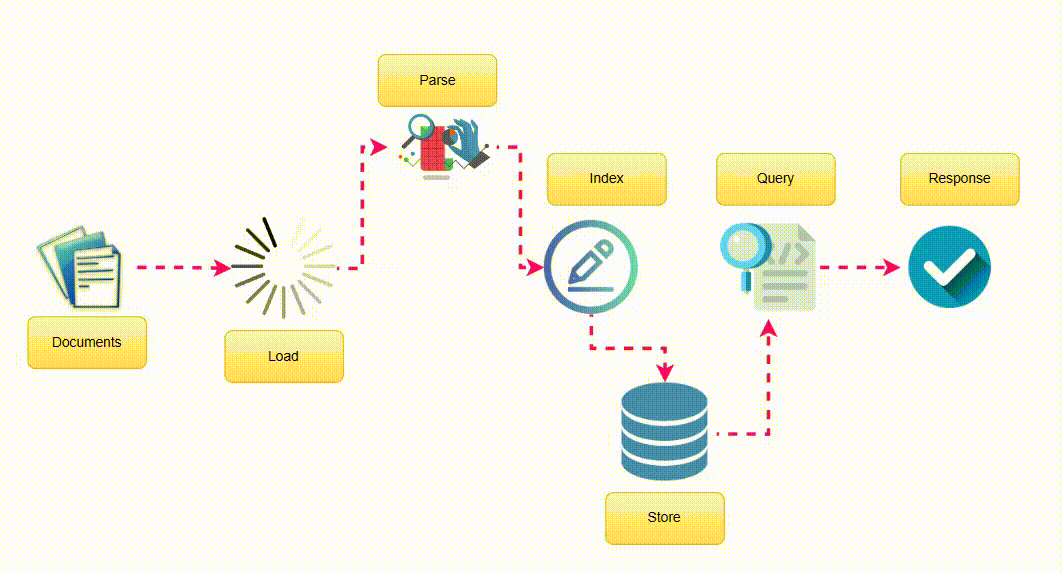
Overview of LlamaIndex
The LlamaIndex is especially remarkable since it is interoperable with both Python and Typescript, offering a versatile and readily navigable platform for both researchers and developers. This framework redefines how we engage with and utilize LLMs, going beyond simple data management. Offering a natural language interface for people to interact with data creates new opportunities for user-friendly and effective data processing and utilization.
Why LlamaIndex?
LlamaIndex bridges the critical gap between generic LLMs and your own domain expertise. It allows you to perform a variety of tasks by unlocking the full potential of LLM by:
- Inject your specific data and knowledge into LLM processing, leading to more accurate and personalized responses.
- Build intelligent applications like chatbots, Q&A systems, and even code generation tools, all powered by your unique knowledge base.
- Simplify LLM development with user-friendly tools and a seamless integration process.
Essentially, Llamaindex empowers you to harness the raw power of LLMs with precision and control, transforming them into domain-specific allies for tackling your unique challenges.
Implementation of RAG over Excel Sheets
Step 1: Library Installation -
- llama-index - Core library that provides framework for working with data for LLMs.
- llama-parse - Add-on library that works with LlamaIndex, focusing on parsing files for RAG.
!pip install llama-index llama-parse
Step 2: Library Imports -
- llama_index.llms.openai import OpenAI - Imports the OpenAI class that provides functionalities to interact with OpenAI’s API.
- llama_index.core - Imports two classes, Settings and VectorStoreIndex. Settings is used for configuring operations of LlamaIndex and VectorStoreIndex deals with managing and indexing vector representations of data.
- llama_parse import LlamaParse - Is the class used to parse documents and prepare it for LLM.
- google.colab import userdata - Is for using Colab secret keys.
from llama_index.llms.openai import OpenAI
from llama_index.core import Settings
from llama_index.core import VectorStoreIndex
from llama_parse import LlamaParse
from google.colab import userdata
import nest_asyncio
import os

nest_asyncio.apply()
Step 3: LlamaParse Configuration - Create an instance of LlamaParse with the api_key and result_type parameters. Execute the load_data method on parser object, here the excel file is used in parsing.
api_key = userdata.get("LLAMA_CLOUD_API_KEY")

parser = LlamaParse(
   api_key=api_key,
   result_type="markdown",
)

documents = parser.load_data("/content/sample_data (1).xlsx")
Step 4: OpenAI LLM Configuration - Set the OpenAI API key and initialise the OpenAI LLM.
os.environ["OPENAI_API_KEY"] = userdata.get("OPENAI_API_KEY")
llm = OpenAI(model="gpt-3.5-turbo")
Settings.llm = llm
Step 5: Vectorise and Query - VectorStoreIndex will index the excel data based on vector representations and query engine will enable interaction with the indexed data using queries.
index = VectorStoreIndex.from_documents(documents)
query_engine = index.as_query_engine()
Step 6: Execution - Passing the queries as an argument and executing:
Prompt 1:
response = query_engine.query("What is the genre of The Shawshank Redemption?")
print(str(response))
Output:

Prompt 2:
response = query_engine.query("What is the IMDB Ranking and who is the Director of Inception?")
print(str(response))
Output:

Prompt 3:
response = query_engine.query("What are the genres in Inception?")
print(str(response))
Output:

Excel Data Snapshot:
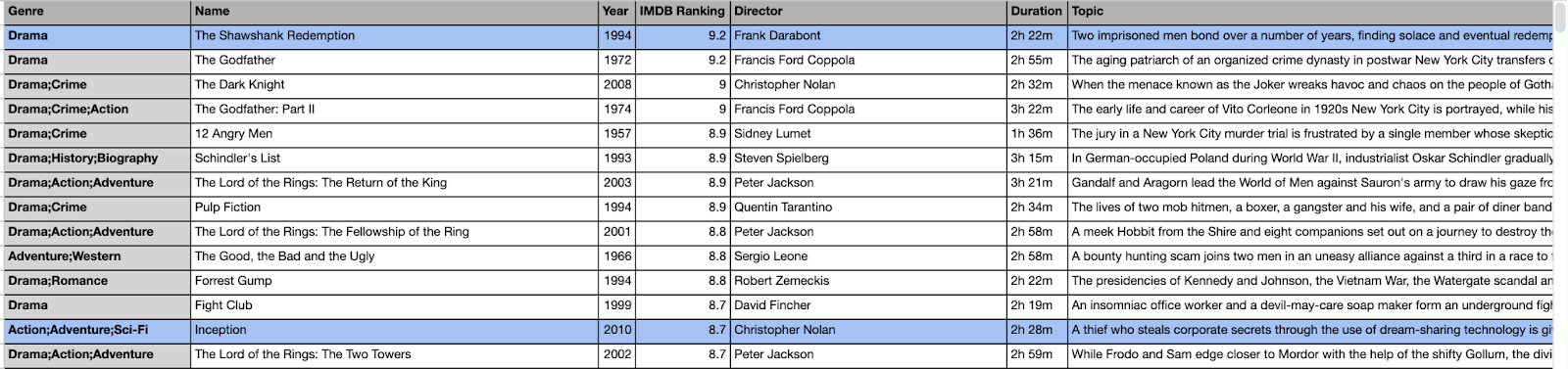
The query returns the correct response as per the excel data (shown in the snapshot).
Final Words
LlamaIndex and LlamaParse are a great combination when working with retrieval augmented generation based on excel sheets. They are able to handle the excel sheets, transform them into a suitable format for RAG tasks and enable efficient retrieval of relevant information based on semantic similarity. Overall, this approach can be very beneficial for various applications relying on Excel data.
References
Learn more about RAG and LlamaIndex through our hand-picked modules:
Sachin Tripathi
Sachin Tripathi is the Manager of AI Research at AIM, with over a decade of experience in AI and Machine Learning. An expert in generative AI and large language models (LLMs), Sachin excels in education, delivering effective training programs. His expertise also includes programming, big data analytics, and cybersecurity. Known for simplifying complex concepts, Sachin is a leading figure in AI education and professional development.