The ADaSci Journal
Field notes for people who ship AI.
505 articles: deep dives on agents and LLM systems, career guides for AI engineers, and case studies from enterprise programmes.
02 · All articles
Everything, newest first.

Why React Needed a New Core Architecture
Modern React applications feel smooth, responsive, and intelligent, but this experience is the result of a major architectural evolution. React Fiber was introduced to overcome performance limitations and enable smarter rendering. In this article, we explore why React rebuilt its core, how Fiber works at a high level, and what it means for developers building high-quality user experiences today.

Hands-On SEO & AEO Strategies for Google, AI Overviews, and Answer Engines
AI-powered search engines are changing how content gets discovered ranking alone is no longer enough. This guide breaks down how to combine SEO and Answer Engine Optimization (AEO) using hands-on, practical techniques. Learn how to structure content for AI visibility, become a cited source in answer engines, and future-proof your content strategy.
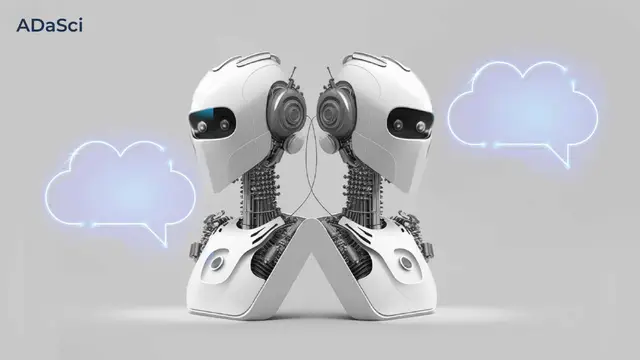
Single Agent vs Multi Agent Systems: How AI Thinks and Acts
Single-agent systems centralize intelligence for simplicity, while multi-agent systems distribute tasks across specialized agents to solve complex, scalable problems collaboratively.

DeepSeek-V3 Explained: Architecture, MoE and MLA
How DeepSeek-V3 works: its Mixture-of-Experts design, Multi-head Latent Attention, FP8 training and multi-token prediction, explained with sources.
A Deep Dive into Cache Augmented Generation (CAG)
CAG eliminates retrieval latency and simplifies knowledge workflows by preloading and caching context. Learn how this innovative paradigm improves accuracy and efficiency in language generation tasks.

Short-Term vs Long-Term Memory in AI Agents
Short-term and long-term memory in AI agents enhance decision-making, learning, and adaptability in diverse applications.

The Rise of Agentic DevOps
Agentic DevOps redefines operations with AI agents autonomously planning, executing, and optimizing DevOps workflows.

RAG + MCP: How Retrieval Fixes Tool Selection in AI Agents
RAG combined with MCP improves AI agents by grounding tool selection in retrieved context, reducing hallucinations, improving accuracy, and enabling reliable, explainable decision-making across complex workflows.
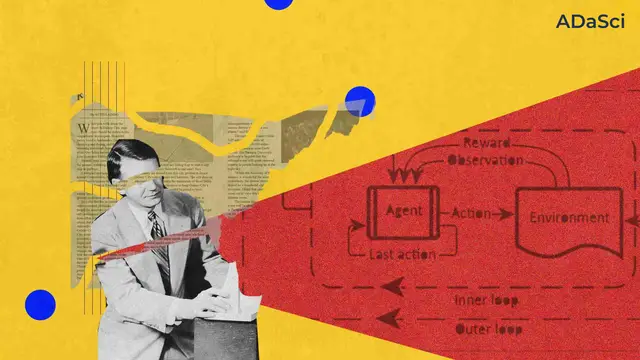
The Future of Data Analysis in the Age of Large Language Models
Large language models reshape data analysis by generating code and explanations, not calculations, acting as reasoning amplifiers while humans ensure rigor, accuracy, and decisions, reliability.